Did you know that you are storing tension in your body? You are holding tension in your muscles, fascia, all kinds of tissue. The system that I want to tell you about today is the visceral system like your heart, kidneys, lungs, and stomach. Your internal organs.
Imagine a lion getting ready to chase an animal to catch for food. Its whole body uses tension effectively and efficiently to run fast on the chase. Once the lion catches its food and starts to eat, the lion’s body relaxes so it can focus on eating and digesting the food.
Humans also find food, but do not relax after the chase is over. Your body needs to relax to enable digestion just like other animals.
While the lion is resting and eating its prey, humans are grabbing fast food, bolting down the street to their next meeting while sipping on a red bull and smoking a cigarette. How can anyone operate efficiently like that?
To walk fast while eating high carb food while drinking a highly caffeinated drink and smoking. Imagine how much tension is being held in your body doing all those things at once. Your body cannot operate effectively like this.
I thought humans were the intelligent species?
In other words, humans remain tense and continue to carry tension in their organs long after the danger has ended. What long term impact does that have on your body?
This amount of tension wears your organs out faster than necessary. It restricts your blood flow and changes your blood composition. It reduces your concentration span and slows down your decision making.
That’s right, you put unnecessary strain on your heart, kidneys, liver, gut. These vital organs become inefficient and ineffective. They work extremely hard and wear out. I don’t know about you, but I want to live a long and active life.
How did this tension become stored in our organs in the first place? Every time you experience a shock like falling off a swing, stubbing your toe or breaking your arm as a child creates tension. Unlike other animals, you don’t relax after the danger has passed.
- You don’t realise that the danger has passed
- You stay tense in preparation for the next shock
- You don’t know you are storing tension in your organs
- You don’t know how to feel your internal world
You also store tension in tissue like muscles, fascia, Central Nervous System (CNS) but today I am focusing on the visceral system.
Using the analogy of the lion, humans find food but do not give the body a chance to digest it efficiently.
The lion is relaxed eating its food so the body can use the nutrition for the next task. People on the other hand hold and store the tension in their organs from the previous trauma and continue to the next one. Tension builds and builds over time until we develop symptoms and get sick.
I don’t want to store tension in my internal organs.
Here are some first steps to change this habit.
Step 1:
Awareness – practice being aware every time your body gets a fright. Can you feel how your body responds when it gets frightened?
Step 2:
Being in your body – pay attention to your heart. Can feel your heartbeat? Can hear your stomach gurgle. Can you feel tension in your body?
Step 3:
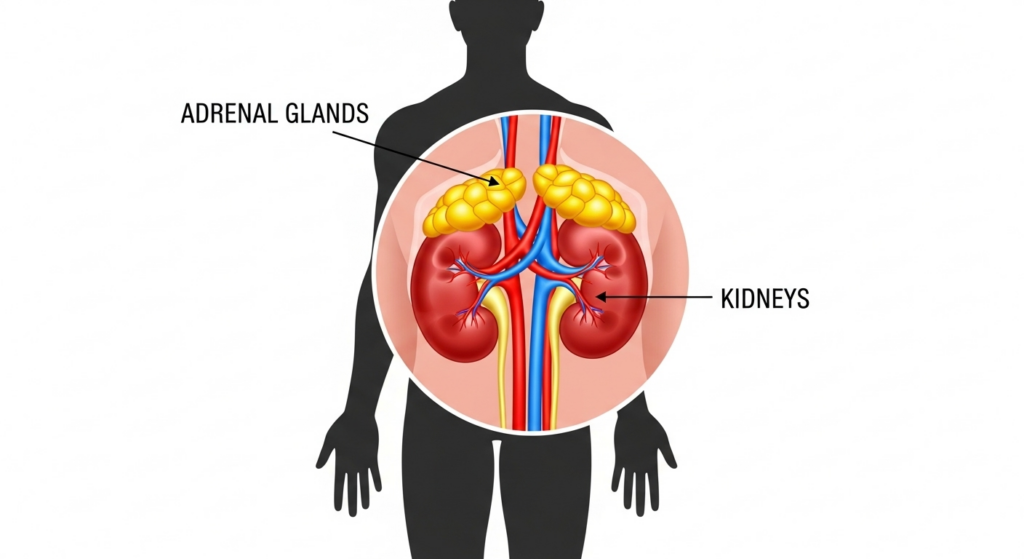
Connection – challenge yourself and connect to your adrenal glands, two triangular organs, that sit on top of your kidneys. Your adrenal glands do many things including producing vital hormones, regulating your stress response and triggering your body’s fight & flight response to danger.
You can look at a picture of these organs and imagine them in your body. Now imagine focusing on them as they sit there. This is a great start. For those who take this activity on, good for you!